About Us
150 Years of Vande Mataram
150 Years of Vande Mataram is a national commemorative initiative to celebrate the spirit of Vande Mataram and its unique role in the history of India. Vande Mataram is not just a song; it is the collective consciousness of India and was the rallying cry of freedom fighters during the struggle for independence.
On 1st October the Cabinet approved country-wide celebrations for the 150th anniversary of ‘Vande Mataram’ to foster an impactful movement to connect citizens, especially our youth and students, with the song’s original, revolutionary spirit. The celebrations will honour this timeless message and ensure its legacy is fully celebrated and embedded in the hearts of the next generation.
Role of Vande Mataram in the Freedom Struggle
Over time, Vande Mataram became a rallying cry of freedom fighters, a spiritual force, and a devotion to the motherland and a depiction of inspiration against the foreign power. The colonial authorities recognized its power — they banned its singing or display, as it evoked deep patriotic sentiments. It soon became a psychological chant that linked “Vande Mataram” not only to song, religion, or processions, but to inner purpose glorified as being as strong as religion (“Vande Mataram” already depicts devotion, Indian fighters, and heroism).
Several initiatives like Swadeshi Andolan were instrumental in popularizing it as a central cry of the Independence movement. According to many historians, “Vande Mataram” was recited by political workers during protests, meetings, and assemblies. People realized that singing Vande Mataram was not merely a political act but a spiritual one, depicting complete love and devotion to one’s motherland.
In 1918, Gurudev Rabindranath Tagore’s version of Vande Mataram was also taken as the base for Congress meetings. Philosophers like Aurobindo Ghose believed that Vande Mataram’s blessings carried divine strength for India’s freedom fighters. Thus, Vande Mataram was issued as part of the proclamation of the Provisional Government of Azad Hind.
Use of Vande Mataram during the Partition of Bengal
In 1905, Vande Mataram was an important part of the protests against the partition of Bengal. In 1906, a massive rally was conducted at Calcutta Town Hall to protest against the partition. Legend says Lord Curzon asked 40,000 people to participate in the meeting, and all of them sang Vande Mataram there. Lord Curzon later ordered the police to arrest anyone who sang the song.
Vande Mataram Movement of Gulbarga
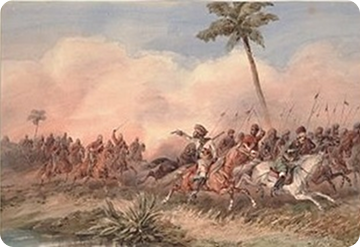
Vande Mataram Movement in Gulbarga, Karnataka, is said to be a significant moment in the history of the Hyderabad-Karnataka Freedom Struggle. Slogans were earlier part of the Hyderabad-Karnataka Movement, and Vande Mataram was always a symbol of resistance against Nizam’s rule. Historical leaders like Dr. Sharanabasappa, Dargah Qadeer, and Gulbarga University students participated actively.
On 9th November 1948, during its resistance, there was a peaceful march led by Vande Mataram leaders when they were attacked by Nizam’s police. As of 28th November 1948, the entire region joined the protest using the slogan “Vande Mataram.” They later presented this movement before Sardar Vallabhbhai Patel, who praised their unity for the nation and assured an increased administrative division

